Halevia
A privacy-focused health companion that turns symptoms into clear, conservative next steps.
- Status
- Internal alpha
- Year
- 2026
- Role
- Design and development
- Links
- Source code is private
Overview
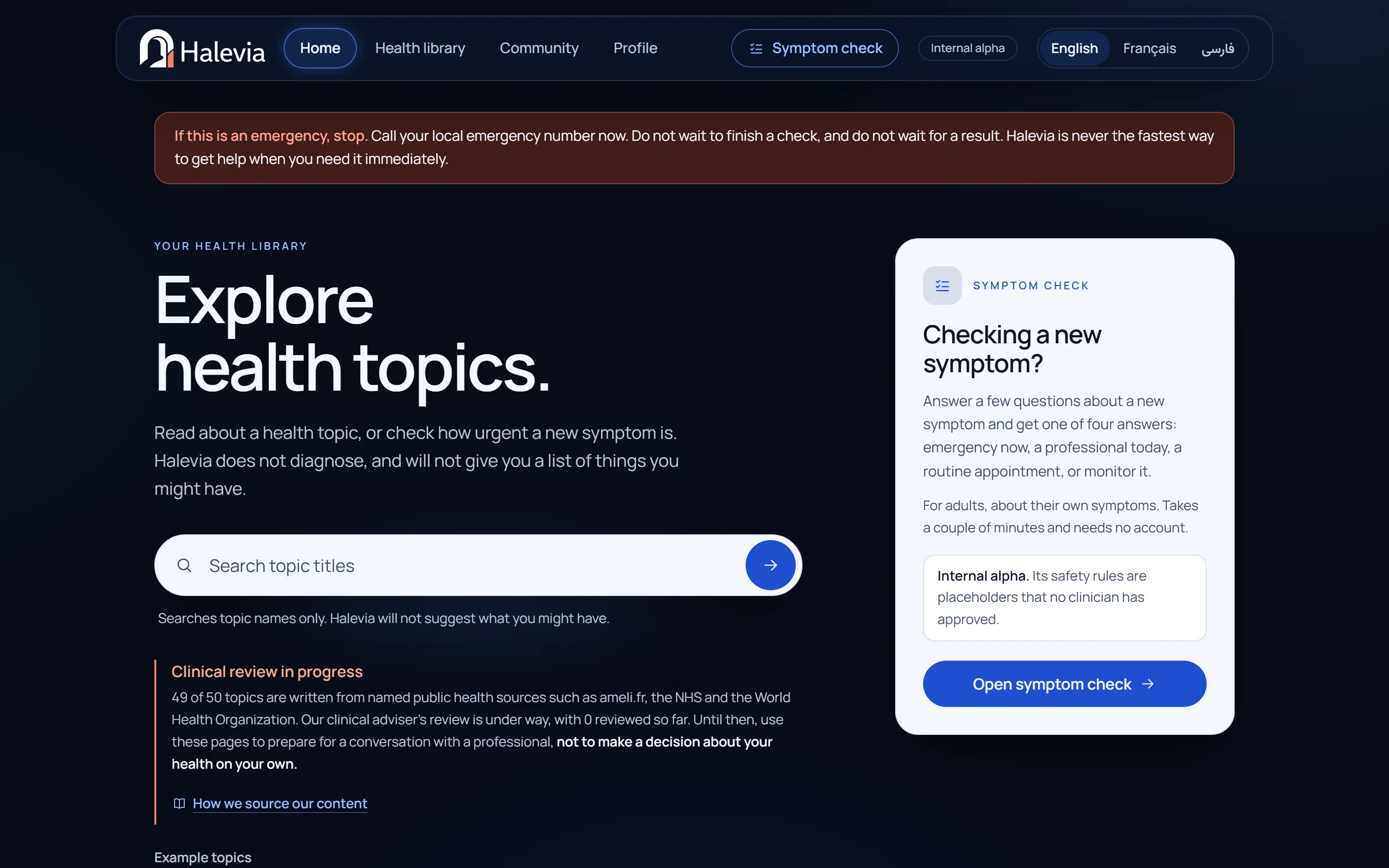
Halevia helps a person understand a new symptom and decide what to do next: call emergency services, see a professional today, book a routine appointment, or keep an eye on it. It doesn't diagnose and won't list conditions you might have. Around it sits a health library written from named public sources. The launch market is France.
What I built
- The full symptom-check journey: symptom entry, follow-up questions, an emergency interruption, four urgency outcomes, a summary to show a clinician, and every loading, error and not-enough-information state.
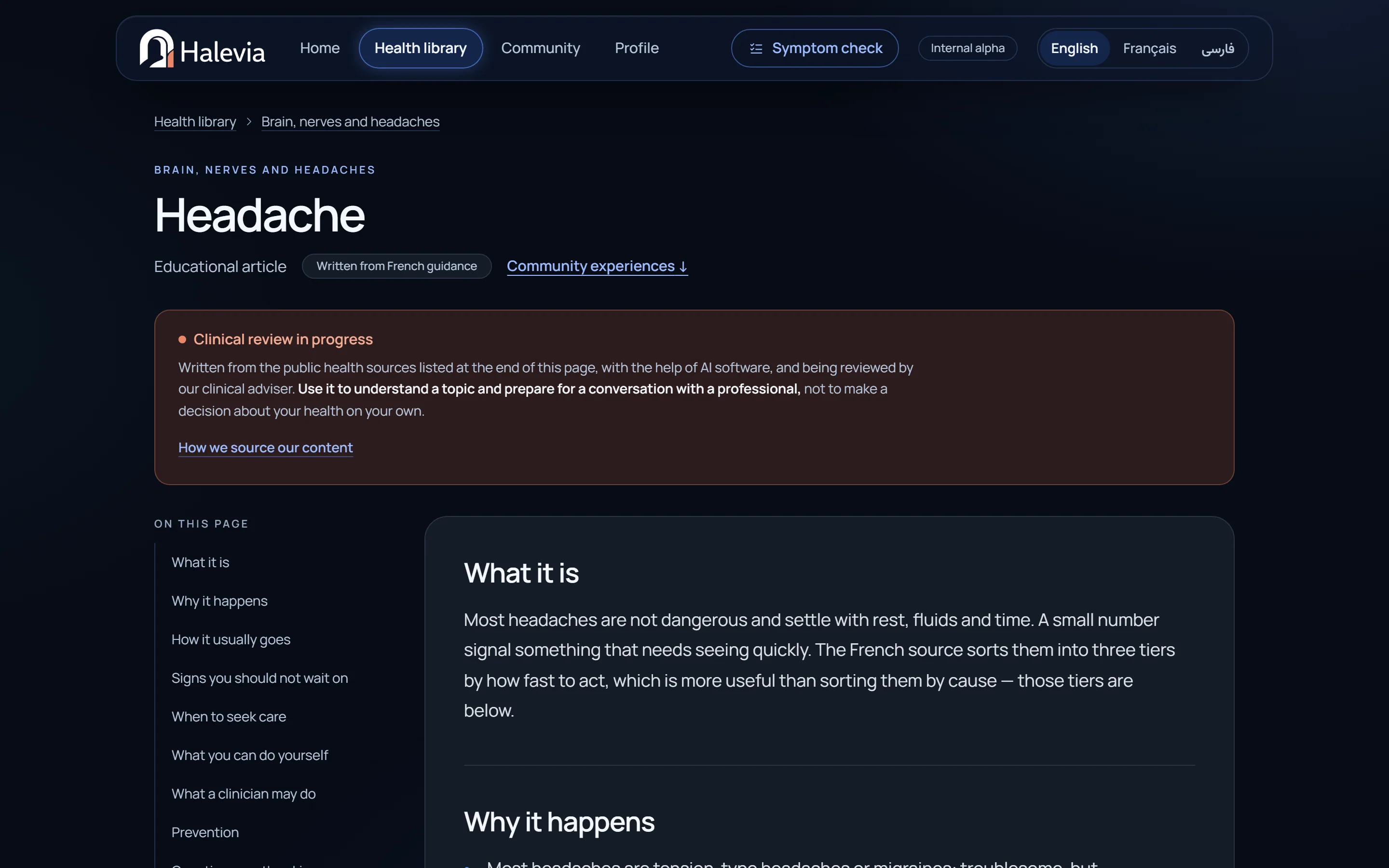
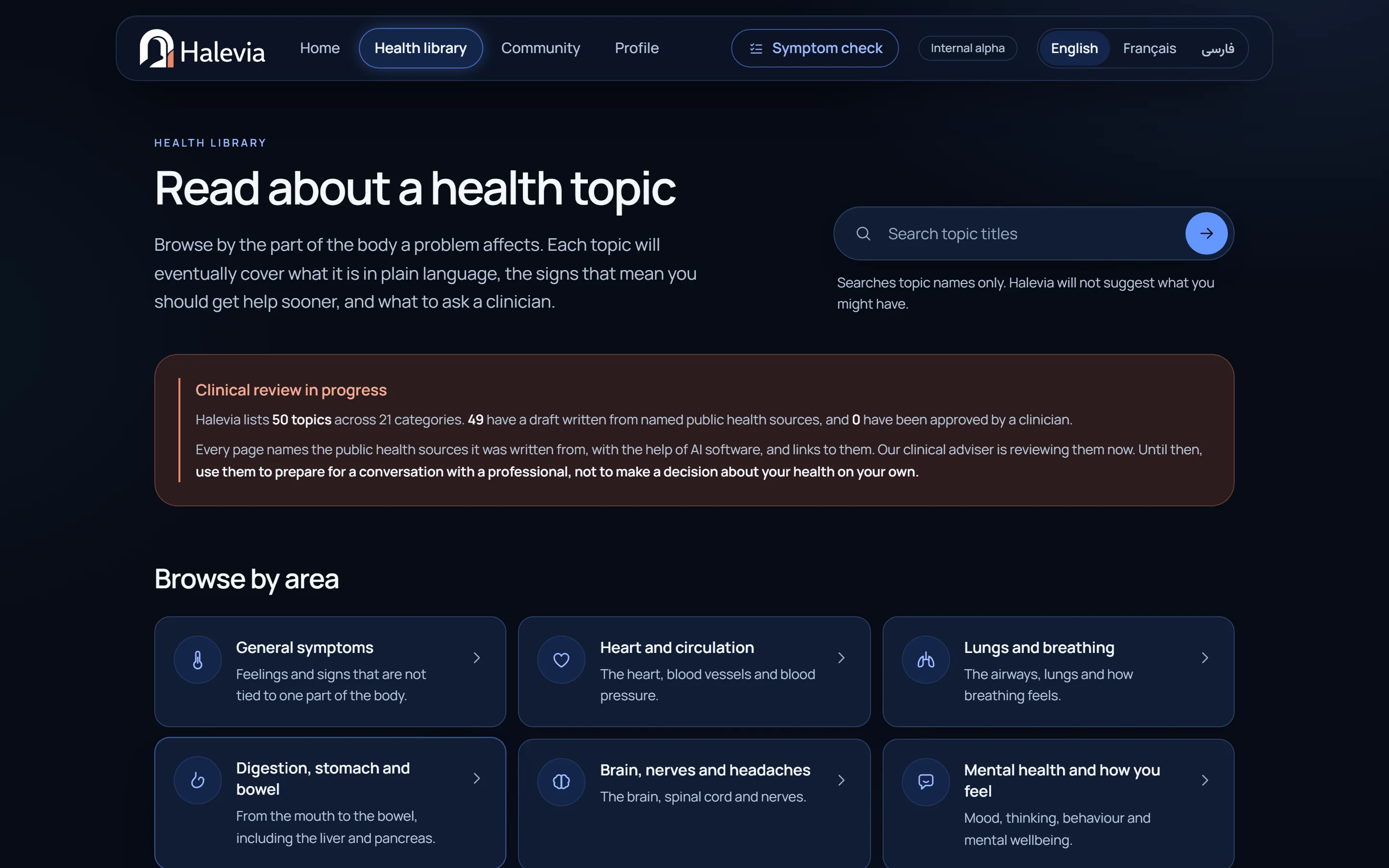
- A health library of 50 topics in 21 categories. 49 have drafts written from named public sources (ameli.fr, WHO, NHS, MedlinePlus), each marked as unreviewed on every page.
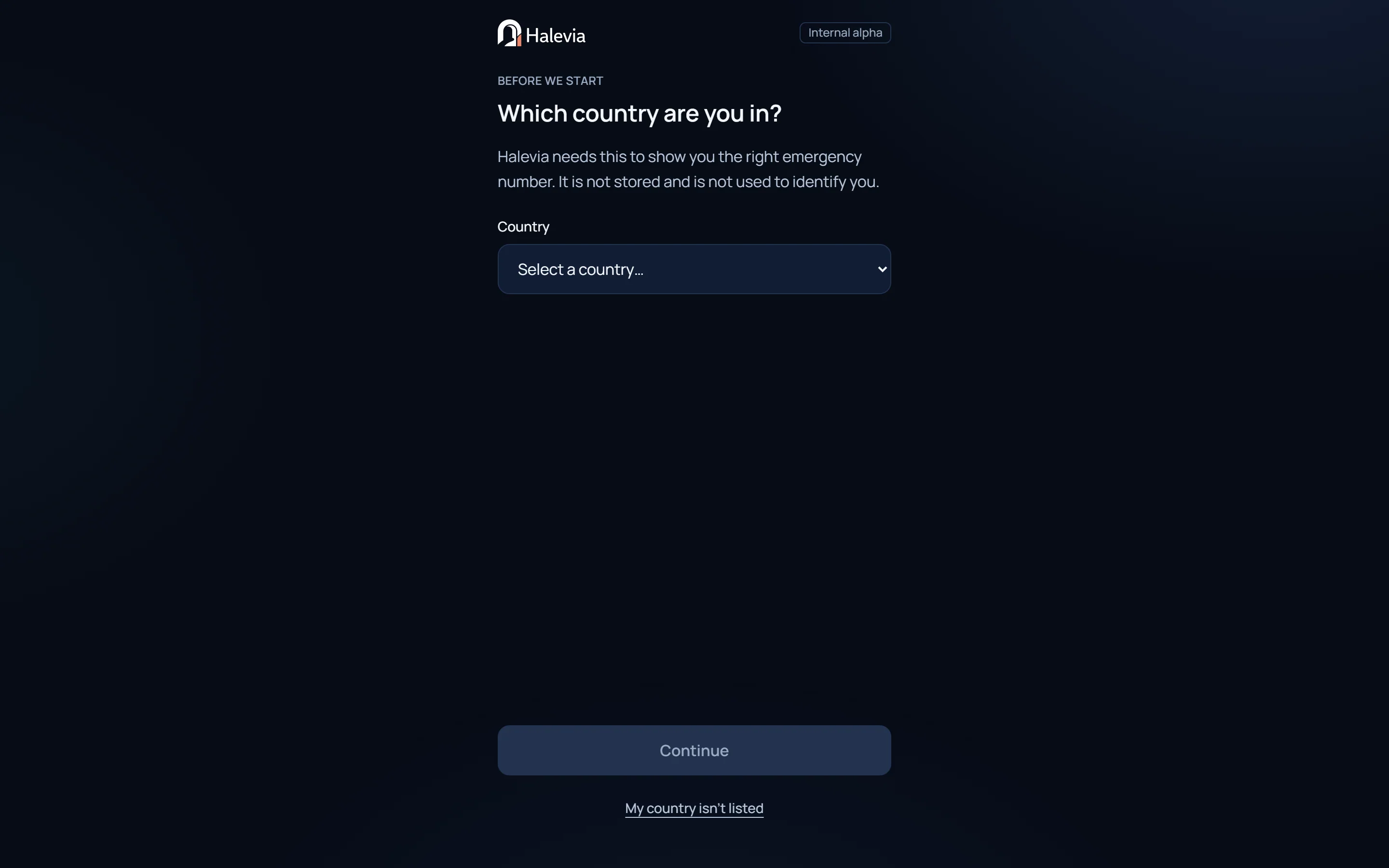
- No account needed. An optional health profile is stored on the device only, and the app uses no cookies or trackers.
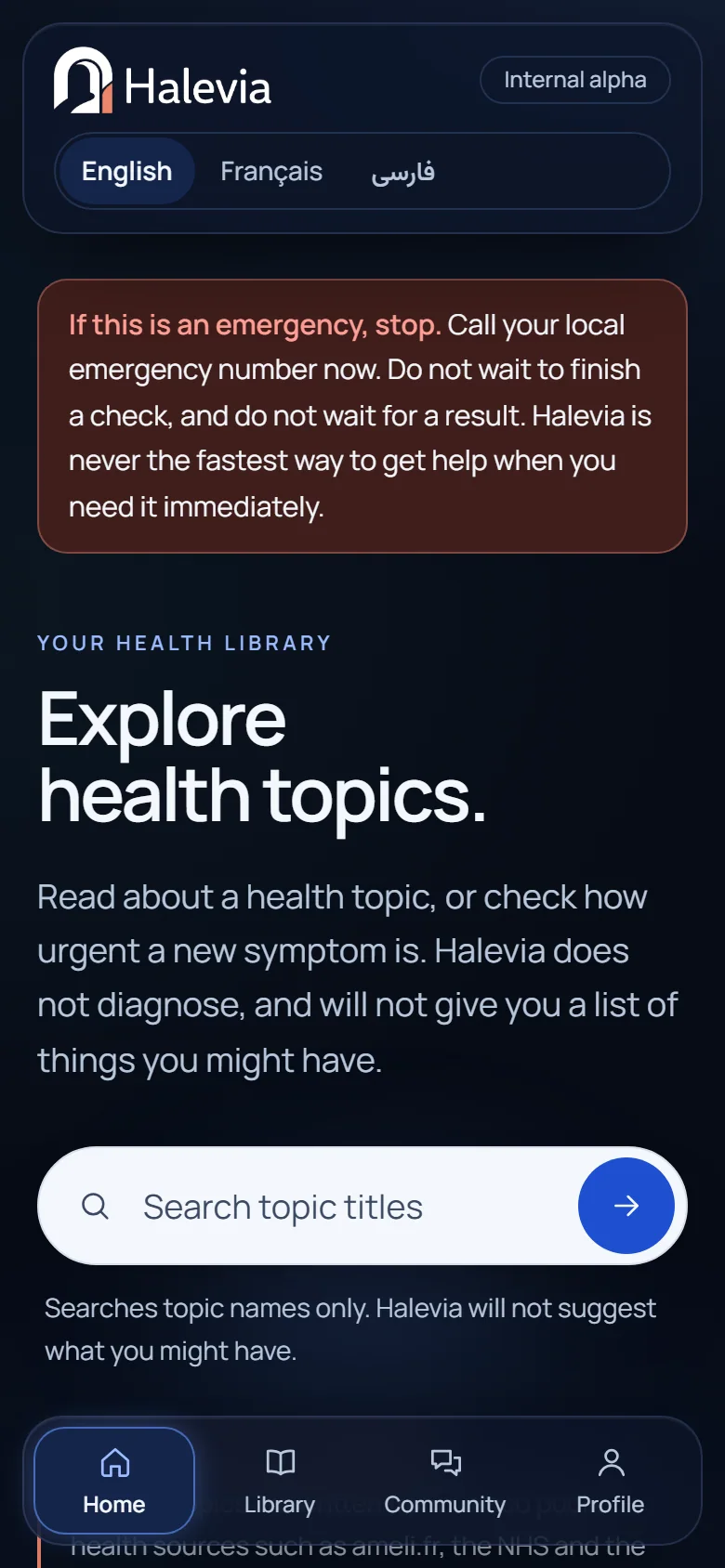
- Interface in English, French and Persian, including right-to-left layout.
- The safety specification, 28 test scenarios, a privacy brief and a regulatory brief were written before the interface, and product decisions are recorded as numbered decision records.
- Automated unit and end-to-end tests, including accessibility checks with axe.
Honest limits
- Halevia is an internal alpha. It is not clinically validated, has no regulatory status, and must not be used to make a real decision about anyone's health.
- Its safety rules are placeholders that no clinician has approved, and no clinician has reviewed the library drafts yet.
- There is no public version. The repository is private.
Screenshots